This post sees us drive from Nis in Serbia to
Sofia in Bulgaria (Country 8) via Dragoman Marsh, visit the city centre of
Sofia and surrounds with a day trip to the Rila National Park. Bulgaria is my
105th UN Country (total 193) and my 99th to run in. Our
last night in Nis was a delight as we celebrated our half-way mark in the
journey by feasting on fish, cabbage and traditional dish of beans and pulled
smoked meat cooked in the oven (see photo).
Bulgaria (Pop 6.9m, Highest Peak 2,925) is 1.62
times the size of Tazzie. The predominant ethnic group is Bulgarian at 85% and
the predominant religion is Orthodox Christian at 59.9%. It is situated on the
eastern flank of the Balkans, and is bordered by Romania to the north, Serbia
and North Macedonia to the west, Greece and Turkey to the south, and the Black
Sea to the east. Bulgaria is a developing country, with an upper-middle-income
economy, ranking 56th in the Human Development Index. Its market economy is
part of the European Single Market and is largely based on services, followed
by industry, especially machine building, mining and agriculture. Widespread
corruption is a major socioeconomic issue, especially in the Police; Bulgaria
ranked as the most corrupt country in the European Union in 2018. The country
also faces a demographic crisis, with its population shrinking annually since
around 1990; it currently numbers roughly seven million, down from a peak of
nearly nine million in 1988. Bulgaria is a member of the European Union, NATO,
and the Council of Europe. Bulgaria is the oldest country in Europe to bear the
same name since its formation. The National Dish is “Shopska Salad” made with
cubed cucumbers, diced tomatoes, chopped peppers and covered in shredded
Bulgarian Fetta Cheese. John Vincent of Bulgaria also invented the first
digital computer. Facebook founder Mark Zuckerberg also had a Bulgarian grandfather
Marko who migrated to the USA in 1940. The national language is Bulgarian,
another Cyrillic based variant of Russian and Serbian but the currency is the
Lek since the Euro has not yet been adopted but coming supposedly in 2023.
It took us a whopping 67min to get our exit
stamp from Serbia at the border with Bulgaria – this brought back memories of
Africa for me but this time is was caused by heavy traffic and a lack of border
staff rather than corrupt officials trying to milk you for money using delay
tactics. We were surprised by the different number plates of the many European
cars exiting Serbia – we spotted a total of 12 countries. The locals run heaps
of toilets here for 1 Euro use and must make a fortune from the wait – I reckon
this is a scam! The entry into Bulgaria was a mere 19min and the road was a
shambles – this should be limited since a new highway is being built. The
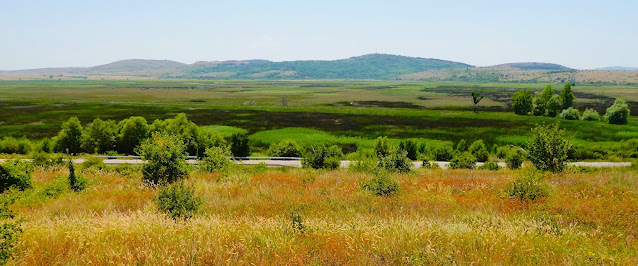
landscape was hilly covered in thick pines and then opened up to areas of
wetland – the biggest of these being the Dragoman Marsh, which is home to 200
species of bird and 140 of plant.



Sofia (Pop 1.24m, Elev 553m) is big and spread
out in a huge flat basin surrounded by the Vitosha, Lyulin and Balkan Mountains
making it the third highest European capital after Andorra de la Vella and
Madrid. Is also one of the oldest European cities since it is the sight of
ancient Serdica, which is thought to have been founded in 7,000BC. Like Athens,
Sofia is still discovering parts of Serdica under the city, the last of which,
was in the new metro station in the city centre. The Greek Thracians founded
Serdica and occupied it up until the Romans followed by the Ottomans.
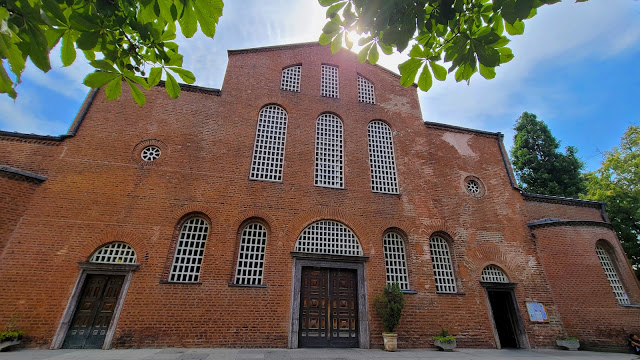
The highlight of our visit to Sofia was easily
the Russian Orthodox Cathedral of Saint Alexander Nevsky, which is a divine
piece of Orthodox Architecture, laden with multiple golden domes and a huge
pew-less 3,172 square metre interior, which can hold up to 5,000 people. We
caught the last 30min of the Liturgy, which featured a multi-voice choir that
literally lifts you to the Heavens.
Sofia has several grand wide open squares
featuring huge classical buildings and the highlight of these is National
Square featuring Parliament and the Presidential Palace. Sofia is also slightly
different in that many commercial buildings can be found amongst the classical
ones but the roads have a long way to go being mostly bricks (like cobblestone)
and bitumen which needs repairing. Sofia is also notorious for speed humps with
no signs to warn you they are there !!!






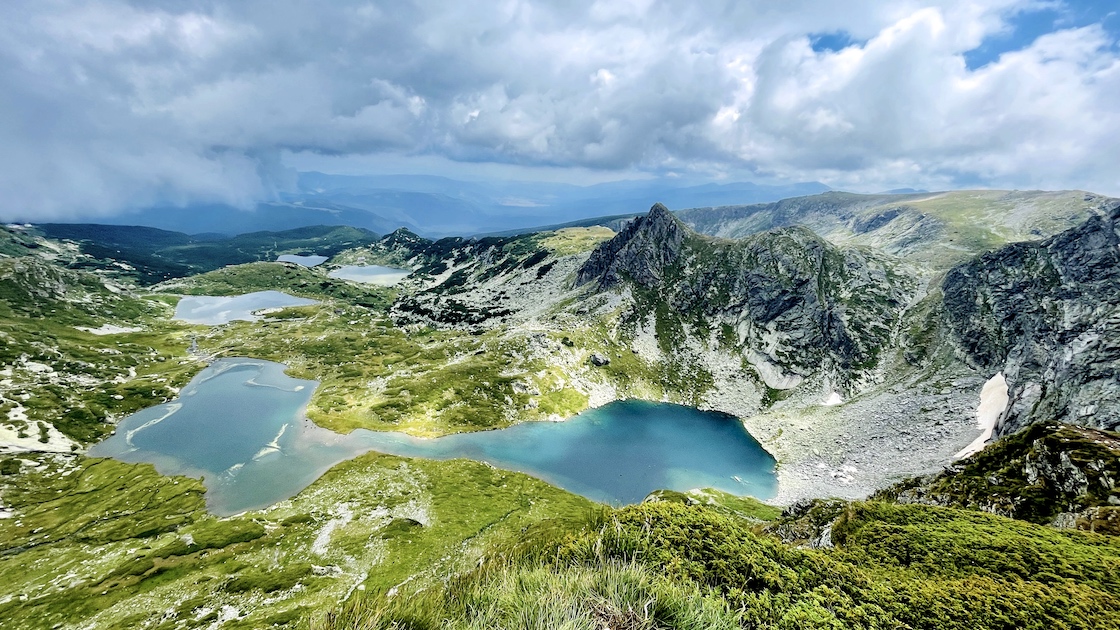
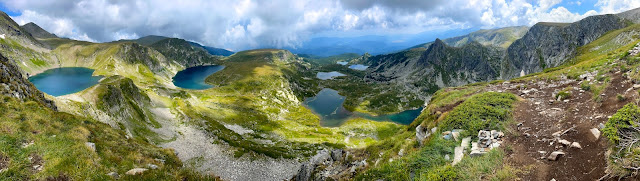
The highlight of our stay in Sofia came the
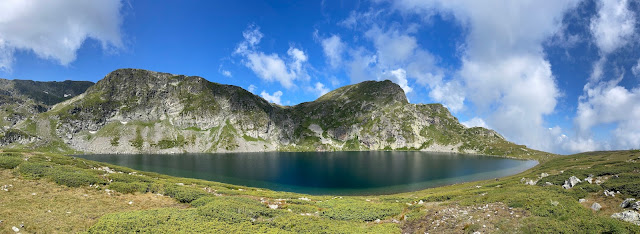
next day, outside Sofia, in the Rila National Park, which is home to a famous
trek around 7 Alpine Lakes above 2,100m. It is adventure all the way. A
spectacular pine forest drive to Panichishte, where you get on a two-seater ski
chairlift that travels 2,163m up a pine-covered mountain at an average speed of
6km/h and raises you from 1,585m to 2,100m. Paris opted out as soon as he saw
the chairlift and it is lucky he did because there is no way he would have
survived the 22min it took to get up there on a totally exposed chair and no
way he could have survived the trek that Leo and I accomplished that day. And
what a trek it was. Easy for me, just right for Leo. A total length of 8km with
total ascents of 465m and accomplished in 2hrs (4km/h average). The views of
the Lakes was breath-taking and reminded me very much of Cradle Mountain in
Tasmania Australia. No need to describe it – just enjoy the photos below.
After the Rila Lakes we drove to the Rila
Monastery – another highlight for us and probably the best monastery we have
seen to date. This Monastery is significant in that it is the foundation of
Bulgarian Orthodox Monastism. In 865 King Boris I declared Orthodoxy the official
religion of his kingdom and a humble man known as Ian Rilski born 876 became
the first hermit monk to live in the area. He died in 946 and many were healed
at his grave making him an overnight Saint and attracting many others to become
monks in his honour. This led to the establishment of the Rila Monastery in the
10th Century, which survived the Ottoman attacks and became a preserver of the
Bulgarian Orthodox Faith, which led to the modern day nickname of the
“Bulgarian Jerusalem”. A truly inspiring place as you will see…









Our final day in Sofia was relaxing, focused on
a drive to a nearby mountain to take in the views of the city and then a cool
swim at the Iskar Lake. Our desire to “relax” was upstaged by the worst road of
our trip so far when we tried to reach the Kamen Del mountain peak – do NOT go
there – instead go to the Kopitoto Telco tower which has an abandoned chairlift
on its right with OK views of the city and a road that actually gets you there
!!!
I was the only one to swim Iskar Lake – good
news was the water was 22C but the bad news was that it was quite murky and
full of rocks and sunken trees, which were hard to navigate. The best place to
go is the Kamelot Hotel, which has a beach with weekday free banana lounges and
a great restaurant.
Enjoy our last day in Sofia...
GOODBYE LOVELY SOFIA !!!