This post covers our drive from Tartus on the
Mediterranean Coast to centrally located Palmyra in Syria. This posts showcases
our visit to the archaeological site of Palmyra and our return trip and stay in
Damascus. We visit a few sites in Damascus the following morning and then dive
back to Beirut in Lebanon. I will be in Beirut for 5 nights before flying out
to Baghdad, the Capital of Iraq. Stand by for more adventure…
The drive to Palmyra was terrific – most of it
through sandy and rocky yellow to white coloured desert. It took us 3.5hrs to
drive from the Mediterranean to Palmyra which is close to the centre of Syria.
There are checkpoints all over Syria. Nowhere near as many as Africa and unlike
Africa they are all manned by the Syrian Government Army and real – no fake
soldiers and no bribes like in Africa. There are especially more checkpoints
into and out of Palmyra given threats to attack the ruins again and its
proximity to Iraq. Our driver and guide are well known to the soldiers so we
had no hold-ups and passed through quickly after showing our papers. The papers
list all passengers and where we are driving so that both are communicated from
one checkpoint to the next to ensure our safety and to prevent us from
smuggling anyone on our way.
Palmyra (Pop 2,000, Elev 380m, Founded 3000BC)
is a sudden and surprising island oasis in a sea of desert. Palmyra located
215km north-east of Damascus exists because of underground water and has been
used for many centuries by the caravan traders of the silk road. Neolithic
remains have been found here but the town is famous for its Greek (4th Century
BC) and Roman (1st Century AD) ruins, which resulted in the whole area being
protected by UNSECO. Sadly UNESCO could not save the ruins from ISIS who badly
damaged almost half of the archaeological structures. We visited The Destroyed
Museum, Temple of Bel, Arch of Triumph, The Great Colonnade, Theatre, Agora
& Tombs. Ethnically, the Palmyrenes combined elements of Amorites,
Arameans, and Arabs. The city's social structure was tribal, and its
inhabitants spoke Palmyrene Aramaic, a variety of Western Middle Aramaic, while
using Koine Greek for commercial and diplomatic purposes. Greco-Roman culture
influenced the culture of Palmyra, which produced distinctive art and architecture
that combined eastern and western traditions. Palmyra was easily the highlight
of my journey in Syria and embodies all that is ancient and rich in culture. I
ended the visit to Palmyra by swimming in the only water hole that gave birth
to this town and sustained it over many centuries.
On our way from Palmyra to Damascus just 90km
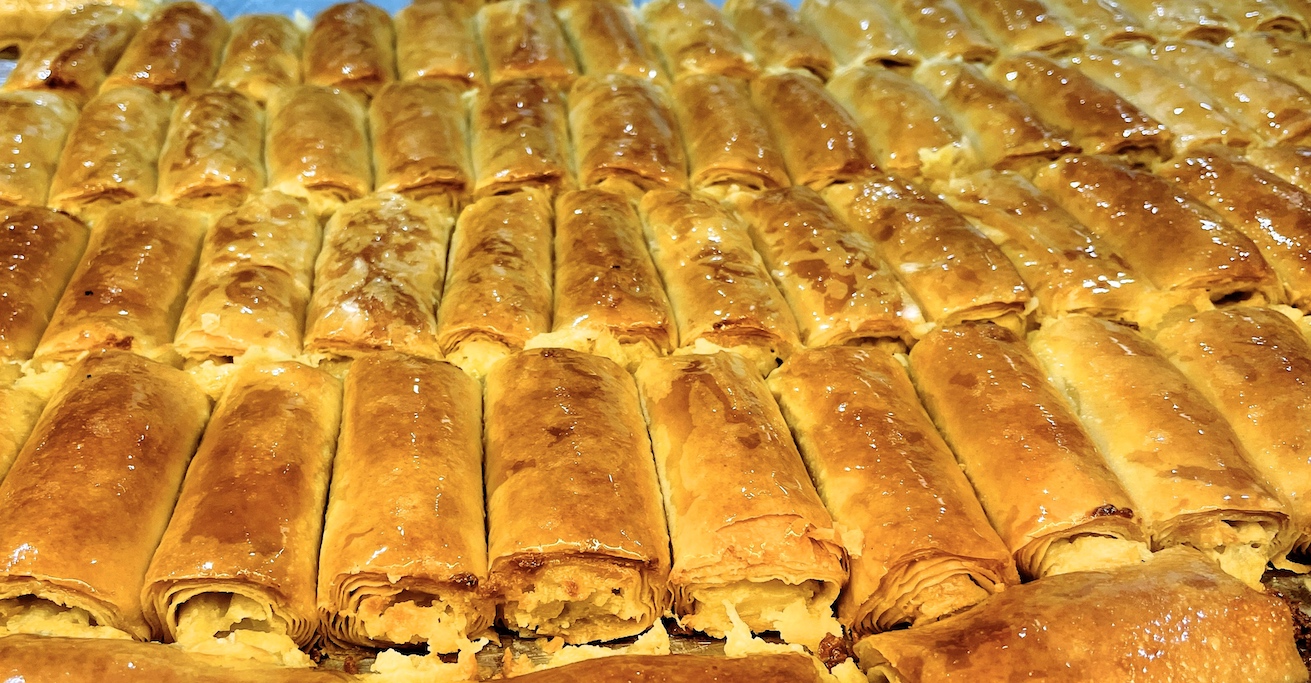
outside the city is a very famous sweet shop where we enjoyed a variety of
Syrian sweets (see photos). Dinner in Damascus was at a fancy rooftop
restaurant being our last night where we enjoyed Mezze or Tapas style local
food washed down with Rakia (like Ouzo) and plenty of beer. After dinner we
retired to more beer and wine in a rooftop veranda of our hotel and reflected
on our great journey through the ancient lands of Syria. We then got on to
discuss the Syrian situation and what each of us would do to rebuild the
country – an enriching conversation that took us to 4am !!!
Lucky for us we were allowed a sleep-in the
following morning and went for a final discovery stroll of the city at 11am. We
all visited the rich Al Azem Palace which was built by As'ad Pasha al-Azm, the
governor of Damascus, and during the French Mandate for Syria and the Lebanon
it housed the French Institute. After being purchased by the Syrian government
from the Al-Azm family and undergoing several reconstruction works, the palace
now houses the Museum of Arts and Popular Traditions. I then got separated from my group in the
crowded souk so I decided to visit the Damascus Citadel on my own. This castle
was built in 1076 by the Turkman warlord Atsiz bin Uvak, although it is
possible but not proven that a citadel stood on this place in the Hellenistic
and Roman periods. By 1230pm I was back at the hotel and we all left for Beirut
at 2pm. A sad affair saying our goodbyes to Rami who was a first rate guide
with a great temperament and easy going nature. Our drive back to Beirut was
held up by big queues at the Lebanese Border Entry. As I left Syria I
contemplated what future Rami and others would have in a nation that is rich in
culture and history but has enormous problems to solve. I am glad I went.
Enjoy the desert oasis of Palmyra and our
farewell to Damascus and Syria…
THANK YOU SYRIA !!!


.jpeg)